AI Threat Modeling in 2026: Secure Data, Models, Agents, and Tools
AI Threat Modeling in Brief AI threat modeling is a structured, iterative process for mapping an AI system’s assets, data and control flows, trust boundaries, actors, and attack […]


Governance covers the organizational controls needed to manage AI security at scale. Learn how to build security programs, assess AI risks, govern agents, evaluate vendors, map controls to frameworks, respond to incidents and create practical security policies.
AI Threat Modeling in Brief AI threat modeling is a structured, iterative process for mapping an AI system’s assets, data and control flows, trust boundaries, actors, and attack […]
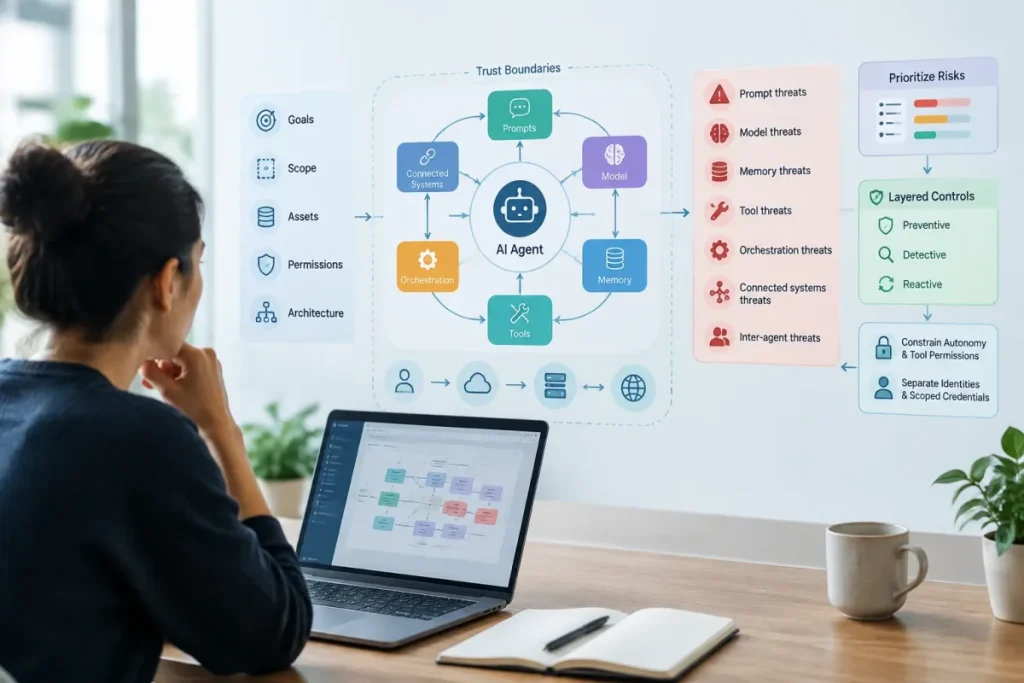
AI-agent threat-model workflow Threat model an AI agent by first defining its goals, scope, assets, permissions, and architecture; then map the agentic loop and trust boundaries; identify AI- […]
AI vendor checklist essentials A useful AI vendor security assessment checklist should cover data handling and privacy, model governance and transparency, security and access controls, AI-specific attack and […]
AI security KPI priorities The AI security KPIs that matter most combine traditional security outcomes with AI-specific controls: adversarial/model robustness, training-data integrity and lineage, unauthorized model or tool […]