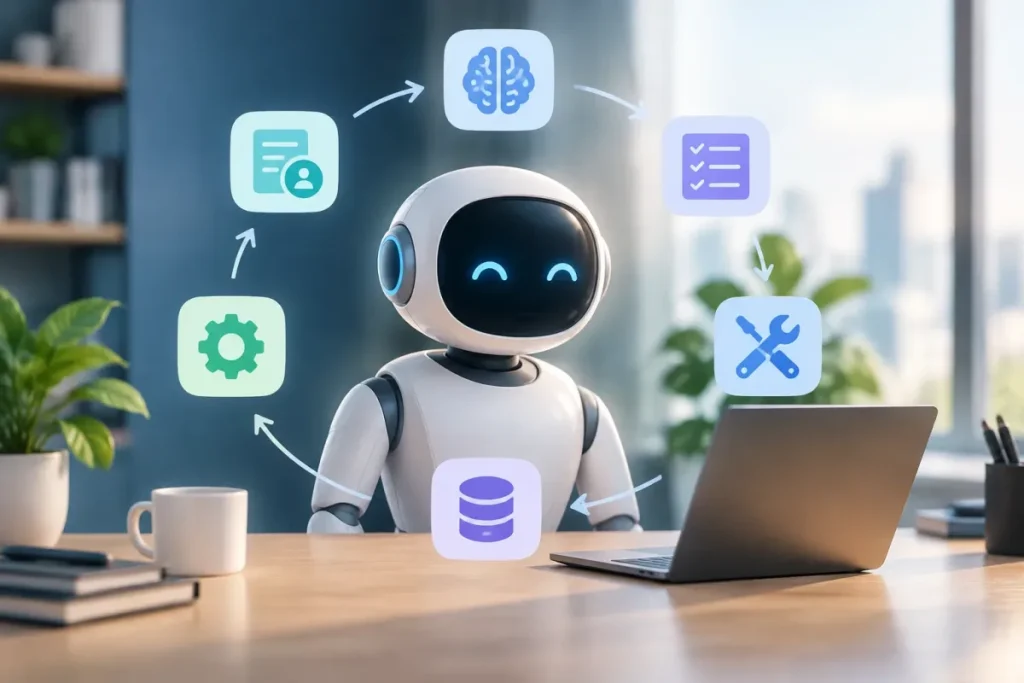
What Is an Autonomous AI Agent? A Practical Guide to How It Works
Key takeaways An autonomous AI agent is a goal-directed AI software system that can perceive or receive context, plan and make decisions, use external tools or connected systems, […]


AI Agent Security focuses on protecting autonomous and semi-autonomous agents that can use tools, access data, execute code and act on behalf of users. This section covers agent permissions, sandboxing, runtime monitoring, tool misuse, memory poisoning, goal hijacking, multi-agent risks and production controls.
Key takeaways An autonomous AI agent is a goal-directed AI software system that can perceive or receive context, plan and make decisions, use external tools or connected systems, […]
Agent Goal Hijacking at a Glance Agent goal hijacking occurs when an attacker manipulates an autonomous AI agent’s instructions, goals, or decision pathways—often through malicious instructions hidden in […]
AI Agent Tool Misuse: Key Takeaways AI agent tool misuse is the unsafe or harmful use of legitimate, authorized tools by an AI agent, often because of flawed […]
In brief Identity abuse concerns whether the system correctly identifies the agent, user, credential, and delegation context acting. Privilege abuse concerns excessive, accumulated, stale, or unauthorized permissions, even […]