How to Conduct an AI Security Risk Assessment in 5 Steps
AI security risk assessment: five stages Use a practical five-stage process: define the scope and inventory AI assets and data flows; identify threats and assess the complete AI […]
Advertising helps us keep this website available. Please disable your ad blocker for this site, then reload the page.



AI security risk assessment: five stages Use a practical five-stage process: define the scope and inventory AI assets and data flows; identify threats and assess the complete AI […]

The best AI agent security tools in 2026 go far beyond scanning prompts. AI agents can authenticate to systems, call APIs, use MCP servers, execute code, access files, […]

AI Agent Risk Assessment: 5-Part Lifecycle Perform the assessment as a repeatable lifecycle: inventory and classify the agent and its data/tool connections; define scope, business impact, regulatory requirements, […]
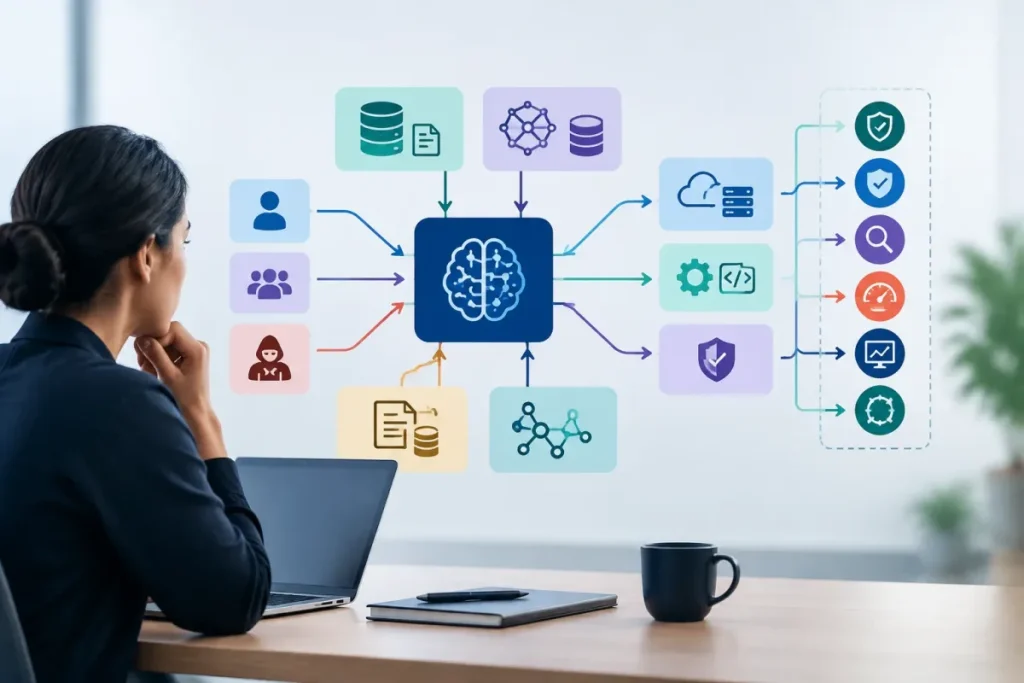
AI Threat Modeling in Brief AI threat modeling is a structured, iterative process for mapping an AI system’s assets, data and control flows, trust boundaries, actors, and attack […]
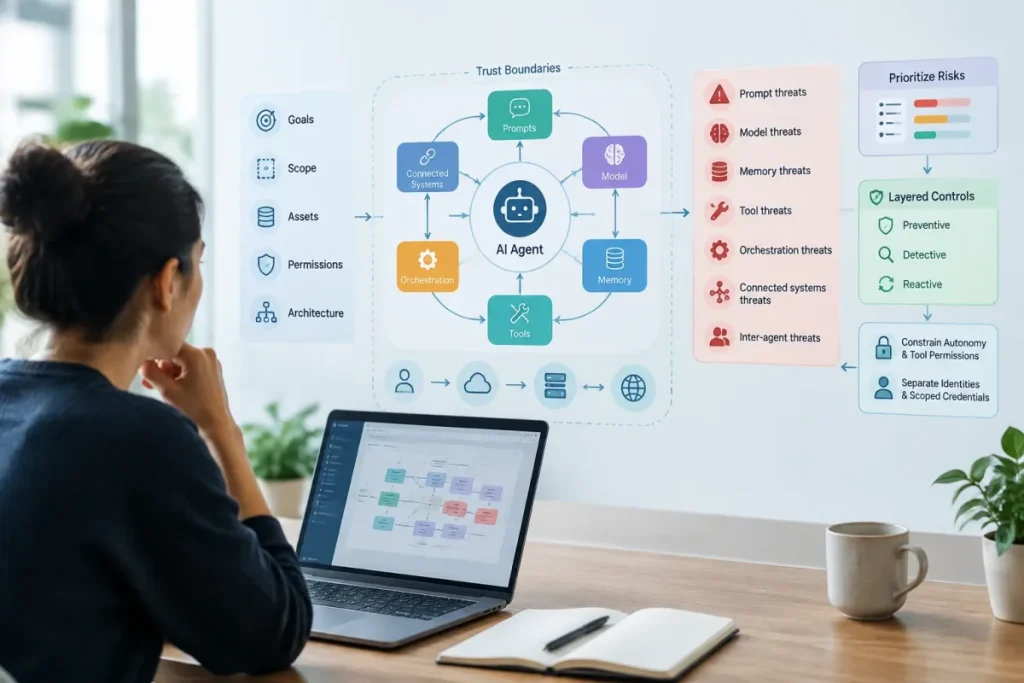
AI-agent threat-model workflow Threat model an AI agent by first defining its goals, scope, assets, permissions, and architecture; then map the agentic loop and trust boundaries; identify AI- […]

AI vendor checklist essentials A useful AI vendor security assessment checklist should cover data handling and privacy, model governance and transparency, security and access controls, AI-specific attack and […]